A Spam and peanut butter (chunky) sandwich: That was what I had for lunch, forty years ago, today. After that, I watched along with the rest of the world, as Eagle touched down on the surface of the Moon.
It was a hot summer day in Danville, California. My family lived in a nice house, in a nice neighborhood. Nevertheless our home, like many built in that era, didn’t have air conditioning. So, my father moved the family TV set (19” black and white, rabbit ear antennae) out onto the partially shaded back patio. He sprayed water onto the concrete, which helped make it surprisingly cooler.
My friends, two brothers Mike and Russ, were visiting. We had been friends for a long time (two years was long time to an eight year old). So, they had become accustomed to being served odd concoctions at my house, invented by my Dad. Spam and peanut butter sandwiches was one of those. It was surprisingly, not too bad. I had experimented once with a plain Spam sandwich. I quikly went back to including the chunky peanut butter.
I can remember like it was yesterday, watching that grainy black and white TV and listening in as Eagle approached the surface of the Moon and landed. Even as a young boy, I knew that the world had just changed. I also knew that I wanted to be like those guys on the Moon. I wanted to be an astronaut!
Twenty years later, I found myself in Houston, interviewing at NASA to be a member of the thirteenth astronaut group. What a heady time to become an astronaut! President Bush (41) had just announced the Space Exploration Initiative (SEI), calling for a return to the Moon to stay, followed by a crewed mission to Mars. And, we had astronauts in key NASA management positions, including that of the Administrator.
SEI fell flat, soon after the President failed to win reelection. The $400 billion price tag quoted by NASA might also have had something to do with it. Fifteen years after the SEI announcement, I found myself standing with a small group of fellow astronauts at NASA Headquarters, as President Bush (43) announced the Vision for Space Exploration (VSE) in the wake of the Space Shuttle Columbia accident. The Vision called for, among other things, a crewed return to the Moon by 2020, and a crewed mission to Mars, on an indefinite schedule.
The Constellation program, which grew out of the VSE, was described by then-NASA Administrator Mike Griffin as “Apollo on Steroids.” Indeed, it called for the creation of a capsule spacecraft (albeit, much larger). Five years into Constellation, the Nation stands at a crossroads. The program has had its share of challenges and controversy and the budget is universally agreed to be inadequate. Newly inaugurated President Obama has ordered a review and a report, outlining a set of options for NASA and the agency’s new Administrator (I am a member of the Review of U.S. Human Space Flight Committee).
Today, on the 40th anniversary of the Apollo 11 Moon landing, our return to the Moon is tenuous, at best. Who, in 1969, could have imagined that we would not have regular travel to and from Moon bases by the 20th anniversary of Apollo 11? The announcement of the SEI in 1989 gave us hope that we would be back on the Moon to stay, within another twenty years. Those twenty years have now passed.
Tonight, I was an invited guest at the 40th Apollo anniversary celebration at the National Air and Space Museum. Everything was perfect: The Apollo 11 crew - Neil Armstrong, Buzz Aldrin and Michael Collins were elegant and stately against the backdrop of historic air and spacecraft. Other Apollo-era astronauts, like my friend Walt Cunningham, were also shining honorees. They were all a part of it!
It was a reminder of old times, of the past grandeur and wonder of the Apollo era. The time when we, as a nation, felt like nothing was impossible! A time, when Spam and peanut butter (chunky), tasted better than almost anything.
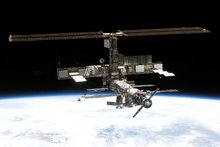
Should we look back at the last forty years and be disappointed? I believe that would be a mistake. Skylab was a resounding success. Despite the challenges, the Space Shuttle and ISS are marvelous flying machines. We started down the road of international cooperation with the Apollo-Soyuz Test Project, and led the formation and maturation of the current, highly successful international partnership. We have not had the big home run since Apollo, but we have made steady progress.
Where will the next twenty years take us? Against all odds, Spam is still going strong. Let’s keep moving forward too.
Leroy Chiao
This post appeared yesterday on Gizmodo.com
Devon Island Expedition
This blog features educational updates on my Devon Island Expedition of July 14-20, 2007. Other sites: spaceref.com/blogs/earthclassroom, www.marsonearth.org

Tuesday, July 21, 2009

Saturday, June 27, 2009
Augustine Committee Work Continues
Thank you to everyone who has provided input to the Committee through this blog, direct emails and other means. Our work continues, and I can assure you that I have read everything that has come in.
We will consider all options and points of view. We have and will continue to ask a lot of questions, and have analyses done by NASA and independent outfits. We plan to issue our report by the end of August.
One thing to emphasize: Our charter is not to make recommendations, but to present options to the Administration. We have a good group of folks, with different backgrounds. We are all dedicated to this work, and promise a careful and thoughtful report with several well-explained options.
Thank you for your continuing support!
Leroy Chiao
We will consider all options and points of view. We have and will continue to ask a lot of questions, and have analyses done by NASA and independent outfits. We plan to issue our report by the end of August.
One thing to emphasize: Our charter is not to make recommendations, but to present options to the Administration. We have a good group of folks, with different backgrounds. We are all dedicated to this work, and promise a careful and thoughtful report with several well-explained options.
Thank you for your continuing support!
Leroy Chiao
Monday, June 1, 2009
Augustine Human Space Flight Review Commission
Today, I was named as a member to the Augustine Commission. We have been tasked to develop options for the next NASA Administrator (Congratulations on your nomination, Charlie Bolden!) and the White House.
I have my ideas, some of which have been expressed in this blog. But, I have an open mind and have never thought that i knew it all, about anything. So, let me know what you think! Where should America's manned space program go? How can we do it within the proscribed budget?
Leroy Chiao
I have my ideas, some of which have been expressed in this blog. But, I have an open mind and have never thought that i knew it all, about anything. So, let me know what you think! Where should America's manned space program go? How can we do it within the proscribed budget?
Leroy Chiao
North Korean Miscalculation?
Last week, North Korea conducted a nuclear test, barely fifty miles from the Chinese border. They also are currently gearing up for a long range missile test. The threat is clear. True, their last missile test was less than successful, and by most accounts, their nuclear test was crude (experts appear unanimous in their belief that the North Koreans do not yet have the ability to make a small warhead, that could be fitted onto one of their missiles). However, it is a matter of time and will.
But, have the North Koreans miscalculated? China is, for the first time in my memory, publicly angry with North Korea for their hijinks, especially the bomb test. Especially so close to the border. North Korea is TOTALLY dependent on China for raw materials and supplies as basic as food, fuel and electrical power. Does it really pay to bite the hand that feeds you, especially when you've burned your bridges with almost the rest of the world (I suppose Venezuela might come to the rescue)?
Has Kim Jong Il totally lost it, or are these the death throes of a nation destroyed from the inside?
Leroy Chiao
But, have the North Koreans miscalculated? China is, for the first time in my memory, publicly angry with North Korea for their hijinks, especially the bomb test. Especially so close to the border. North Korea is TOTALLY dependent on China for raw materials and supplies as basic as food, fuel and electrical power. Does it really pay to bite the hand that feeds you, especially when you've burned your bridges with almost the rest of the world (I suppose Venezuela might come to the rescue)?
Has Kim Jong Il totally lost it, or are these the death throes of a nation destroyed from the inside?
Leroy Chiao
Monday, May 25, 2009
Life in Space – The Rest of the Story


Last time, I asked if any of you could imagine how you might clip your nails in space. Anyone thought this through? Here’s how I did it.
First, get a strip of duct tape, and make a loop out of it, with the sticky side out. Find a place to do the clipping, next to an air intake filter. This way, any errant nails should be caught in the air filter, for later removal. Find a good place on the wall to stick your tape loop, and then carefully clip each nail, trying to keep the pieces big, so that you have a chance of holding onto them, instead of having them fly off into the cabin somewhere. Fix each piece of nail onto the sticky tape loop.
When you are finished, remove the tape loop, and fold it onto itself, to contain the nail clippings. Then, use the resulting tape double loop to clean off the air filter, of any nail debris, which got caught there. Wad up the tape ball, and discard it into a dry trash receptacle.
Yes, there are wet trash receptacles too, mostly to contain food package trash. Wet trash bags differ from the ones for dry trash, in that they are rubberized and tightly sealed, in order to keep the odors in the bag.
Simple, right?
So, what do you really want to know about life in space? What else might be difficult (or fun) in that environment? What do your enquiring minds want to know? Let me guess: Using the potty, and sex. Even the audiences who don’t ask, I can tell they really want to know.
In the early days, there were no restroom facilities onboard spacecraft. The first flights were only supposed to last minutes, so it was thought that there was no need. The story of Allen Shepard having to relieve himself in his suit became common knowledge, after the event was dramatized in the movie, “The Right Stuff.” Later spacecraft, including the Apollo spacecraft, also had no toilet facilities. The crews of these vehicles used modified piddle packs (used by the military), which utilized a condom, attached to a hose and bag, for collecting urine. What about women? Back in those days, there weren’t any in the space programs (except for Valentina Tereshkova, who probably used a diaper), so it wasn’t an issue.
For collection of number two, modified sealable bags were used. There was no privacy aboard the Gemini and Apollo capsules, so imagine doing all of this in close quarters with your buddies! To make matters worse, these bags were (are) clear. They are still carried aboard US spacecraft, for use in the event of irreparable toilet failure.
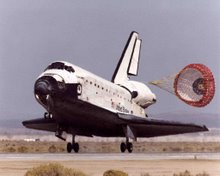
Fortunately, things got a lot more civilized in the Shuttle program. As I mentioned before, the Shuttle is a business class affair. It contains a relatively large toilet area, which features a privacy screen.
The Soyuz capsule also has a toilet in the upper living module. When someone has to use it for number two, the other two crewmembers can retreat to the descent module, to give the third guy a little privacy. Usually, that toilet is not used for that purpose, though. Crews go through a preflight enema, which usually is enough to clean you out for the two days of flight it takes for the Soyuz to phase, rendezvous and dock with a space station.
The toilet aboard the International Space Station (ISS) is the same as the one that flew on the MIR station. This is also a civilized affair, in a relatively large area, with a privacy screen.
So, how do these toilets work? They all basically work the same way. In the absence of gravity to help you, airflow is used to try to collect everything and point it in the proper direction. To urinate, it is pretty simple. Use the long hose, which has a funnel attached to the end. Turn on the system, and make sure there is good airflow before relieving yourself. Make sure not to actually contact the funnel with your valuable parts; it’s a disgusting thought first of all, and second of all, you wouldn’t be able to shut the system down before you really regretted getting the life sucked out of you, so to speak! By the way, this system works for women too. The suction is adequate to make sure that the liquids go to the right place.
For number two, the seat lifts up, revealing a small hole. You’ve really got to get to know yourself, and get good at lining things up for this operation! The system again uses airflow to collect and hold things down where they’re supposed to go. After you’re finished, the bag is tied off and pushed down into the replaceable silver can.
Accidents do happen, and by international agreement, you clean up your own mess!
Is it worth it? One of my crewmates on Space Shuttle once told me that he wished that we could land every morning, so that he could take care of business there, before launching back into orbit. Yeah, it’s not pleasant, but you get used to the hassle of doing these hygiene tasks. It’s not so bad.
Besides, the view of the Earth from space is way worth it! Here are just a few examples of what I saw from the ISS.
This is the southern tip of Florida.
Here is the Salamat Basin.
We do have DVD’s and E-books onboard. Sometimes we use them, but who needs them? The greatest show is right outside the window!
Ok, so onto the question burning in your mind: Has anyone had sex in space? To date, I can tell you emphatically, no. Why am I so sure? It’s simple. Guys are guys. If a guy had sex in space, he would not be able to stand not bragging about it. Am I right, or am I right? Sorry to disappoint you, but there it is. We would ALL know about it. Or, I should say, we WILL all know about it when it happens.
So, what’s the deal? Do we have blow up dolls or robots to take care of business?
No, and not that we’d really want such a thing! The human looks a lot better.
Besides, would sex in space, bragging rights aside, really be so great? This week, I’ve given you a look at the difficulties of doing things in microgravity, and the potential for making some pretty disgusting messes. So, apply all you’ve learned, and honestly assess whether or not sex would be better up there. You’d have to anchor yourselves, somehow (in all six degrees of freedom), otherwise it would be more than the headboard you might bang up against. And, some objects, while not sharp (we are careful about that), might really hurt to run into during a moment of passion!
So what do we have? What do you think? There is a rule that even alcohol (for drinking) is not allowed onboard, because NASA is worried about bad PR. Can you imagine NASA wanting to address the issue of sex? Ha!
What about the future, as we fly longer and farther into space? That’s easy. Crews are already mixed, and crews will become larger. As this happens, there will be a gradual transition from crew to colony (for example, a permanent moon base). Just like in your office now, romances will sprout (which the participants will think are secret) and things will take their natural course.
And, people back on Earth (the guys friends) will know about it, almost instantly after it happens. The news will quickly spread from there. And then, you’ll know.
People are people, even in space!
Leroy Chiao
Leroy Chiao is a professional astronaut. He served for fifteen years at NASA, flying on four space missions. Dr. Chiao is available for speaking engagements, through the Leading Authorities Speakers Bureau: www.leadingauthorities.com/24172/leroy_chiao.htm
Originally posted on Gizmodo, during the week of 5/3/09
Saturday, May 23, 2009
Life in Space –Onboard Basics


Ok, so someone wanted to know what the International Space Station smells like. After we opened the hatch, I noticed a moderate smell of plastics, not unlike that new car smell. That’s from the various synthetic materials onboard, outgassing. It’s not too bad, and after an hour, I stopped noticing it.
We do scrub the atmosphere, though. We have carbon dioxide removal systems,
as well as a micro-impurities removal device. Oxygen is added of course, as it is consumed. We use an electrolysis device to crack water, dumping the hydrogen overboard.
That device is a bit cantankerous, so we also have oxygen candles, which we “burn” periodically. These are the same kinds of systems that are onboard nuclear submarines, which face similar technical requirements.
One interesting fact, is that nitrogen is not replaced, except to compensate for leakage. The human body does not really utilize the inhaled nitrogen, so it is recycled.
What else? What is the temperature onboard? The temperature was set by the Mission Commander (me). I live in Houston, so I like air conditioning. The cabin was set to about 70 degrees F.
You have all read about how to brush your teeth in space. Anyone want to take a stab at how to clip your nails? I’ll write about answer in the next installment.
And, I’ll address what you really want to know, on Friday.
Leroy Chiao
Originally posted on Gizmodo, during the week of 5/3/09
Friday, May 22, 2009
Life in Space – The Beginning (Soyuz)


Last time, I wrote about what launching aboard a Space Shuttle is like. This time, let’s consider the Russian Soyuz rocket and spacecraft. Why? Isn’t a rocket a rocket? Is it really that different? Yes and no, no and yes. They both get astronauts into space in around nine minutes. But, they are very different.
First, consider the two spacecraft. They look pretty different from each other. One is a part of a missile, the other a winged vehicle, attached to a rocket assembly.
If the living space inside of the Space Shuttle is Business Class,
then the Soyuz is decidedly economy.
However, I must say that the Soyuz has a very special place in my heart. It is a robust, capable spacecraft and launcher. It has the best-demonstrated safety record of any manned spacecraft. And, it just feels hearty.
But, how does it feel to launch on a Soyuz?
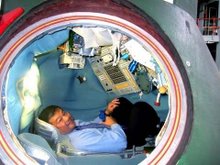
Well first, you almost wear the Soyuz rather than strap into it. Squeezing down the hatchway into my seat, I got an idea of what claustrophobia must feel like. If anyone is the least bit claustrophobic, this would bring it out. Your legs are bent up into your chest. It’s not very comfortable. Like with the Shuttle, you strap in about two and a half hours before launch. But, it gets worse. The Soyuz requires two orbits to get enough telemetry to the ground, for the Mission Control Center to verify that the spacecraft is healthy. During that time, you must remain strapped into your seat, in case you have to perform an emergency deorbit. Total time in that position? About six hours.
So, there’s no dozing off in the Soyuz, you’re too uncomfortable. You wait. And follow along in the checklist, of course. T-Zero is totally different - there is no kick, since there are no solid rocket strap-on boosters. The liquid engines are very smooth. The thrust builds up gently until the rocket simply rises off of the pad. You have to go by your watch, and the announcement from the launch control bunker to know that you are flying!
There is a deceleration just prior to staging, and then a muffled “bang!” as the four liquid strap on boosters separate. Same for the third stage. What surprised me (startled the Hell out of me, actually), was the very loud “BANG!!” followed by an instant flash of bright light. Just for a split second, I thought we were exploding, but it was just the shroud and escape tower separation! I could now see through the porthole, and look down at the familiar view of the Earth, and the bright, fluorescent blue line of the atmosphere on the Earth limb.
You know the rest.
Leroy Chiao
Originally posted on Gizmodo during the week of 5/3/09
Subscribe to:
Posts (Atom)