Devon Island Expedition

Devon Island Expedition
This blog features educational updates on my Devon Island Expedition of July 14-20, 2007. Other sites: spaceref.com/blogs/earthclassroom, www.marsonearth.org

Thursday, May 6, 2010

Trinity Test Site


I had the opportunity to visit the Trinity Test Site today, courtesy of General Regan, of the White Sands Missile Range. It was almost sixty five years ago, when the United States tested the world's first atomic bomb.

It made me think of what that time must have been like, as I was standing there at ground zero. The dedicated teams working fiercely to develop this weapon, which was intellectually interesting, and critical to the United States war effort. It undeniably shortened the war, and saved many lives, on both sides.

However, what went through the minds of the people doing it? Oppenheimer had somewhat of a crisis of conscience. Who wouldn't? At least to some degree? Even Edward Teller must have wondered sometimes, about what he had helped to develop. Yet, it would be naive to believe that had the United States not developed nuclear weapons, that no other country would have. The Germans were working on atomic weapons research during the last days of the war. Does anyone doubt that Hitler, with his V2 rockets to deliver these weapons, would not have used them?

It is not only about war and weapons. What advances came out of this time of crisis and conflict? It is interesting to consider all of this.

Leroy Chiao

Sunday, March 7, 2010

End of an Era

A few weeks ago, I was at the Kennedy Space Center, reporting on the last scheduled night launch of the Space Shuttle program. Endeavour lifted off into the false dawn that she herself created, and rose majestically into the sky, lighting up the wispy cloud layer that was creeping onshore. It was one of the most beautiful space launches I have ever experienced. There are only four more Shuttle launches, before the end of Her Era.

Space Shuttle was born out of this nation, coming off of the highs of Apollo, Skylab, and the Apollo-Soyuz Test Project. Her proponents promised inexpensive, regular access to space, aboard this then modern-day “space truck.” These were lofty goals to be sure, that we never got close to reaching. Instead of fifty-odd flights a year, the best we did was just south of ten. Instead of inexpensive flights, each costs somewhere north of five hundred million dollars.

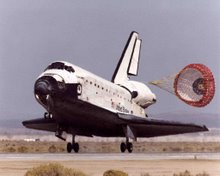
Nevertheless, Space Shuttle is a magnificent flying machine, unparalleled in the history of human spaceflight. The Soviet Union tried to copy her, and failed; their program consisted of exactly one unmanned flight, which ended after one orbit. No other program featured an operational vehicle, which launched into orbit on her own power, loitered in space for two-plus weeks, re-entered Earth’s atmosphere, and landed on a conventional runway like an airplane. No other manned vehicle could even come close to carrying her nearly-sixty-thousand-pound payload capacity. There has never been another operational reusable space system, ever.

When she is put out to pasture, we will have nothing new with which to replace her; after she is decommissioned, the United States will have no independent means to launch astronauts into space. It is unclear when we will have a new crew vehicle, the only thing certain is that we will have a capability gap that will last at least five years, and probably longer.

I was a member of the Review of US Human Spaceflight Plans Committee, chaired by aerospace veteran, Norm Augustine. Appointed by the White House, we worked last summer to evaluate plans and formulate options for the new Administration. It was a difficult conclusion to accept, but we found nothing, not even practically unlimited funding, would minimize the gap between the Space Shuttle and the next US crewed space vehicle, except for extending Shuttle operational life. So then, why is the Space Shuttle going away? Three reasons: She is too expensive to operate, there is a higher risk involved in Shuttle flights than we originally calculated, and because of the last reason, it is politically untenable.

The Augustine Committee, as we came to be known, put forward the option to spur development of commercial, crewed Low Earth Orbit (LEO) access. Why does this make any sense? Commercial may not reduce the gap, but it may offer a better long-term solution for LEO access, since by definition, commercial solutions need to be cost effective, and government systems do not. The technology to get astronauts to LEO has existed for nearly fifty years. The trick is to find a safe, yet commercially viable structure. I didn’t foresee the recent announcement of the cancellation of the NASA Orion crew exploration vehicle (CEV); the commercial option was for LEO access, not exploration. I expected that CEV, along with either a heavy lift vehicle, or a man-rated expendable launcher would serve as a complimentary system to commercial LEO efforts. Details of the US plans for the future of NASA human spaceflight remain to be revealed, but I remain cautiously optimistic. Sometimes it takes dramatic change, even temporary chaos, to affect the possibility of a quantum jump in improvement.

I flew on three Space Shuttles: Columbia, Endeavour and Discovery. This is a bold, new world, but Shuttle will always have a special place in my heart. I will remember them fondly, and I will miss them.


Leroy Chiao

Thursday, February 4, 2010

We are Ready for Commercial Human Spaceflight

US Policy on access to Low Earth Orbit (LEO) is on the edge of a dramatic shift. Currently, only three governments have the independent capability of launching astronauts into LEO: The United States, Russia and China. After the US Space Shuttle is decommissioned from service, there will be only two. The Review of US Human Spaceflight Plans Committee, headed by the highly respected former aerospace executive, Norm Augustine, included in their report, the option of stimulating commercial efforts to provide access to LEO. It makes sense: We have been flying to LEO for almost fifty years, so the technology is quite mature and available. The challenge is to make this a commercial practicality.

The idea of private, commercial space access has been around for decades. It is not a new one, and it is not one that has yet found success. The advent of SpaceShip One winning the Ansari X-prize in 2004, was an important milestone. Although the privately built vehicle was only designed for suborbital flight, it proved that a non-government spacecraft was possible. Commercial orbital flight will be much more difficult, but I believe it is possible.

Many of my colleagues and peers have written articles and pieces, deriding the idea of commercial LEO access. Indeed, the track record of the self-described “New Space” companies has thus far, been marked generally with failure and arrogance. Not all, but many of these folks, before they run their companies into the ground, seem to spend the bulk of their time attending self-serving, self-aggrandizing conferences where openly slinging mud at NASA is sport. This is hardly constructive, and it brings discredit to others who have serious aspirations for the future of commercial spaceflight.

However, I respectfully disagree with my colleagues who believe that only governments can and should engage in human spaceflight. We members of the Augustine Commission (as the review committee came to be known) fully intended for the commercial LEO efforts to include contributions from the traditional aerospace companies. These companies, or their predecessors, built every US crewed spacecraft to date. They have much to offer. To exclude them entirely would be foolish and valuable knowledge wasted.

The time is right for commercial human spaceflight. Private companies should learn the lessons from NASA and traditional aerospace, and then try to apply them in a more efficient manner. It is understandable how and why the processes for government/contractor space programs have evolved into what they are today: Bureaucratic and inefficient, but safe. The key is to work in a smart manner to provide efficiency, without sacrificing safety, perhaps in partnership with traditional aerospace companies.

Anytime there is significant change in the air, the establishment gets nervous. This is to be expected. Sometimes dramatic change is necessary to achieve fresh results. Time will tell if the private companies will achieve LEO access, but I for one, remain optimistic. Americans have always been innovative, flexible and doggedly determined. If it can be done, the citizens of the US still embody the creativity and courage to find the way.


Leroy Chiao

Saturday, January 16, 2010

It Was Twenty Years Ago Today....


Twenty years ago, NASA selected the Group 13 astronauts. I was one of the proud and excited twenty three new faces who reported to CB (the mail code at NASA for the Astronaut Office) that summer in 1990.

It had been my childhood dream to become an astronaut, since watching the Apollo 11 Moon landing as an eight-year old, in Danville, California. 1990 was an exciting time to be starting an astronaut career. President Bush had requested a twenty four percent increase in the NASA budget, to perform the Space Exploration Initiative (SEI). SEI called for a return to the Moon, and a human landing on Mars, by the 50th anniversary of Apollo 11. The President had a Budget Director who was in favor of the new program, and he also activated the National Space Council and made it again a Cabinet-Level appointment, run by the Vice President. President Bush announced SEI on the occasion of the 20th anniversary of Apollo 11. Last year, we passed Apollo 11's 40th anniversary.

Back in that hot 1990 summer in Houston, the Moon seemed to be again within our grasp. I dared to think that some members of my class had a chance of making it to the Moon (me?) and perhaps even a small chance of going to Mars! But, because 2019 seemed so far away in 1990, and because estimates of the program cost were somewhere North of $400 Billion (a big number today, and an even bigger number back then), SEI ended up going nowhere. Today, 2019 doesn't seem so far away, and the price tag of SEI doesn't seem too bad, when compared to the cost of the two wars which the US is waging. What would have, should have, could have been done differently, to make SEI a success? I don't know the answers to that question, but I think about it sometimes.

I didn't get to go to the Moon, which would have been coming full circle to complete my childhood dream. But, I could not have asked for more in a flying career. I spent fifteen years at NASA, and had the good fortune to fly four space missions, logging almost 230 days in space. I've performed six spacewalks, including two using Russian spacesuits. I flew on Space Shuttle, and once as the copilot of the Russian Soyuz spacecraft, and served as the Commander of the International Space Station. I look back at those days with pride, gratitude and humble acknowledgment of my fantastic good luck to have had the opportunities.

Back in those heady days of 1990, the twenty-nine-year-old me had taken that huge first jump to getting into space, and had landed on my feet. nothing else mattered.

Leroy Chiao

Tuesday, December 1, 2009

What is going to happen (for Space) in 2010?

The Augustine Committee briefed the White House on August 14th, released a summary report at the end of August, and released a full report at the end of October. We are well into the holiday season, and the President has many other issues to deal with. What this means, is that no decision on space is likely before the New Year.

So, what will happen in 2010? Decisions will need to be made as to the future direction of US human spaceflight. I have my own predictions, but we Committee members agreed to not make our personal views known until after the White House sets the direction.

But, what do you think?

Leroy Chiao

Thursday, October 29, 2009

On the Future of US Human Spaceflight


There was a historic event the other day. For the first time since 1981, a new rocket was fired from one of Launch Complex 39’s launch pads at Cape Canaveral. This was a flight test of a part of a rocket under development, called Ares-1.

The flight appeared to be flawless. After battling weather constraints, Ares-1x leaped off of Pad 39B and accelerated into the Florida sky. Reaching an apogee of just a bit over 20 nautical miles, the single stage burned out and separated from the dummy second stage, and descended by parachute to the recovery area in the Atlantic.

What is the future of US Human Spaceflight? Will it include the Ares family of rockets?

This summer, I served as a member of the Review of US Human Spaceflight Plans Committee, chaired by respected aerospace veteran, Norm Augustine. Our charter was to review the current NASA programs, and to present options for the US to move forward. President Obama, through his Science Advisor, wanted a reality check. Our job was not to provide recommendations, but rather to come up with options.

The Augustine Committee, which is how we quickly came to be known, was formed in late May. We presented our options to the White House on August 14, 2009. Later that month, we issued a summary report, and just a week ago (October 22nd), issued our final report.

Since August, the Committee and our reports have come under public attack by the former NASA Administrator, and several members of Congress. Lobbying efforts on behalf of some of the big aerospace companies supporting the program of record have produced videos and other products, vociferously supporting said program. Some members of the “New Space” movement have been loudly complaining that they should get a large piece of the space budget, although most of them haven’t produced anything of significance to date. All of this tells me that the Committee did it about right.

What is surprising to me is that most media and other folk appear confused by what is written in the report. There are headlines and accusations that the Committee called for the end of Ares, the end of Constellation, the throwing of human access to Low Earth Orbit (LEO) to the unproven commercial space arena, and other incorrect assertions. Let me try to set the record straight.

Program of Record (Constellation): The Constellation program was a reasonable way to implement the Vision for Space Exploration (VSE), which was announced by President Bush in 2004. However, it never received anticipated funding, and has suffered several technical and programmatic problems. As a result, estimates show that substantial funding would be required to correct these problems. These high levels of funding would be unreasonable to expect at this time. Moreover, the designs would require large recurring costs to operate, a problem, which plagues NASA. The current program evolved from the original VSE and became almost an exclusively Moon-focused program, and then, presumably in the face of budget shortfalls, almost exclusively an Ares/Orion focused program. The baseline option fits the program of record to the Fiscal Year (FY) 2010 budget, by moving the milestone dates significantly into the future. No matter how we got to where we are today, it is a valid question to ask, whether America should continue down this path, or whether a different option would be more reasonable. Frankly, public opinion seems ho-hum on a return to the Moon, with a common theme that we have already been there, forty years ago. Even scientists are for the most part, much more interested in Mars, than the Moon.

Space Shuttle: The Space Shuttle is a magnificent flying machine. Although it fell well short of many of its advertised promises, it is a technological marvel. However, its operating costs are very high, and it has had two fatal accidents in almost one hundred thirty flights. In most options, the Committee stated that the current manifest should be flown out, at a reasonable rate. This is estimated to be executable by mid-2011. In one option, the Shuttle would be operated at a minimum flight rate (one to two flights per year) through 2015.

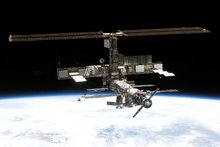
International Space Station (ISS): The ISS is the largest space structure ever assembled. It is a premier microgravity research platform, but also has high costs. One of the most remarkable aspects of the ISS program is the highly successful international framework that has evolved. This framework can and should be expanded, and serve as a basis for future space cooperation. Most options call for operation of the ISS through at least 2020. In the two options, which include the Ares family of rockets, ISS is de-orbited at the end of 2015, because the funds to continue ISS would need to be transferred to the Constellation program. This would have a negative effect on the relationships between the United States and the international partners. In this case, significant doubt would exist, on whether international partners would want to cooperate with the US in future programs. This would also affect other areas of cooperation between the US and these countries.

Heavy Lift Vehicle (HLV): An HLV is needed for exploration beyond LEO. The program of record uses the Ares V vehicle (160 metric tons to LEO), which would require a five and a half segment solid rocket booster, plus a six engine cluster of advanced RS-68 engines, and a ten meter external tank, all three of which have not yet been developed. Shuttle derived options (approx. 85 metric tons to LEO) would use existing Space Shuttle solid rocket boosters, existing 8.3 m external tank and existing Space Shuttle Main Engines (SSME). Evolved Expendable Launch Vehicle (EELV) options (approx. 75 metric tons to LEO) would use variants of the Delta IV and possibly Atlas V. A simplified version of Ares V, which the Committee called Ares V Lite (140 metric tons to LEO) would use five segment solid rocket boosters (already tested), a five engine cluster of existing RS-68 engines and a ten meter external tank, which has yet to be developed.

Crew to LEO: The program of record uses Ares-I to launch the Orion crew capsule to LEO. The recurring Ares-I cost has been estimated to be around $300 M per rocket. Indeed, the Ares-Ix test cost was estimated to be approximately $445 M. In alternative options, the Committee put forward the proposition that commercial companies should be given incentives to create a commercial capability to launch astronauts to LEO. The technology has existed for almost fifty years, and several startup companies are working towards that goal. The Committee proposes that the commercial option be created such that it would be attractive, not only for startup aerospace companies, but also for traditional aerospace companies to participate. There is skepticism in the community on whether the startups will be able to deliver, but there should be no doubt that the traditional aerospace companies, who’s predecessors created all US crew vehicles and rockets in the past, could be successful in this effort, if the proper environment was created. The hope in promoting a commercial crew to LEO access would be the saving of funds for NASA in this arena, as well as freeing up NASA resources to concentrate on beyond LEO exploration.

The Committee put forward three classes of options: Options constrained to the FY 2010 budget, Moon first options, and flexible path options. The Committee agreed that the overall goal should be a crewed mission to Mars. Moreover, there should be a balance between human and robotic exploration missions. Scientific research funding should have firewalls, to prevent their funding from being transferred to exploration programs. The Committee also agreed that international partnerships should be expanded, strengthened and applied to future exploration programs. There should be a technology development program to enable efficient, future crewed exploration, beyond LEO. The table below contains a summary of these options.


The Constrained Options fit the FY 2010 budget, but illustrate that the funding would be insufficient to allow significant exploration progress.

The other options call for a funding increase of $3 B per year. The difference within both the Moon First and Flexible Path options, are the choice of HLV, which also affects Crew to LEO choices.

The Moon First options call for concentrated efforts towards Lunar exploration, with an eye towards Mars sometime later. A variation of the program of record is included in this option set. The Moon First options build infrastructure that could be used for future Mars exploration, but the emphasis is on the establishment of infrastructure for Lunar research and exploration.

The Flexible Path options call for building infrastructure for beyond LEO exploration, by traveling to near Earth objects (NEO), Lagrange points, and other interesting flight profiles. The Moon would be included as a destination, but primarily to test hardware and operations. The intention of the Flexible Path options, is to build infrastructure and capability, to enable sustainable Mars exploration in the future.

All options, except for options one and three, include a technology development program. The Committee felt that it was important to develop new capabilities for exploration. The ISS could be used as a test bed for these efforts. As an example, space refueling of cryogenic propellants would be an enabling technology.

This is a simplified, high level, explanation of the results that the Committee has submitted to the White House and NASA. I hope that this helps to make the full report easier to understand. I hope that it is at least clear that the charter of the review committee was to present options to the Administration, not recommendations. I, like everyone else in the business, look forward to the decisions that will be made by the Administration.
Wednesday, September 9, 2009

An Inspirational Place: NASM


Yesterday, I did something that I haven't done in many, many years. I went over to the National Air and Space Museum and simply wandered around for several hours. It is one of my favorite places, and I was there as recently as July, for the 40th anniversary celebration of Apollo 11. But, during official events, there is no time to simply wander and enjoy the displays.

It was a nice time to relax, dream and remind myself of the magic of flight!

Leroy Chiao